Why an AI Relay Station Can Be Cheaper Than AI Subscriptions
Many people start by subscribing to ChatGPT Plus, Claude Pro, or another AI membership. That is a natural choice: official products are polished, convenient, and often include web access, apps, uploads, projects, voice, image tools, and research features in one place.
But subscriptions also create practical problems. If you barely use the service this month, the fee is still gone. Some regions cannot easily access official products or official payment flows. And if you want GPT, Claude, Gemini, DeepSeek, and other models at the same time, you end up juggling multiple subscriptions, accounts, and interfaces.
The real value of an AI relay station is not a narrow argument about token unit prices. It changes the usage model from fixed subscriptions to one balance, on-demand consumption, and multi-model switching. When a relay station can offer $1 of token credit for roughly one-tenth of the dollar face price, the economics become even more attractive, but the core advantage is still flexibility.
The biggest subscription problem: unused allowance is wasted
An AI subscription is a monthly product entitlement. You pay for access to a product, its tools, and its usage limits. This is great for people who use the same official product heavily every day. It is less ideal for many normal users.
AI usage is often uneven:
- Some days involve heavy writing, coding, research, or document processing.
- Some days only need a few quick questions.
- Some months are busy and the AI tool is barely opened.
- Some tasks only need a cheaper model, not the strongest model all the time.
The subscription problem is simple: low usage months are still charged, and unused allowance usually does not become a reusable balance for later months. For light users, occasional users, and bursty users, a subscription can become paying in advance for capacity they may never consume.
A relay station turns this into a balance model. You recharge once, then consume by actual usage. Heavy periods spend more, quiet periods spend less. For users whose demand changes month to month, this matches real usage better than fixed monthly subscriptions.
The second problem: official access is not available everywhere
Some users do not avoid official memberships because they dislike them. They avoid them because they cannot reliably buy or use them.
Common problems include:
- The official service is not available in the user’s region.
- Account registration, login, or verification is unstable.
- The supported payment methods do not work.
- Credit card payment fails frequently.
- Network access to the official product is unreliable.
- Teams are spread across regions and need a simpler shared entry point.
This is not mainly a token-price problem. It is an access problem: the user wants model capability, but the official product path is inconvenient.
A relay station can provide a more accessible unified entry point. Users do not need to separately handle each official platform’s account, region, payment, and access constraints. They use models through the relay’s API or dashboard instead.
That also means the relay provider matters. The more the relay becomes the entry point, the more important reliability, privacy policy, model authenticity, balance records, and support become. Cheap is not enough. Reliability is what makes it usable long term.
The third problem: one recharge can use different models
Subscribing to one AI product usually locks you into one ecosystem. ChatGPT mainly means OpenAI’s product environment. Claude mainly means Claude’s product environment. Both can be excellent, but real tasks are not always best served by one model.
Different tasks fit different models:
- Chinese writing may feel better on one model.
- Coding may be more reliable on another.
- Long-document summarization may need a long-context model.
- Batch classification, rewriting, and extraction may only need a cheaper model.
- Complex reasoning or planning may justify a stronger model.
With subscriptions, covering all of these cases may mean buying several memberships. That quickly becomes several fixed monthly fees, and each one can still be underused.
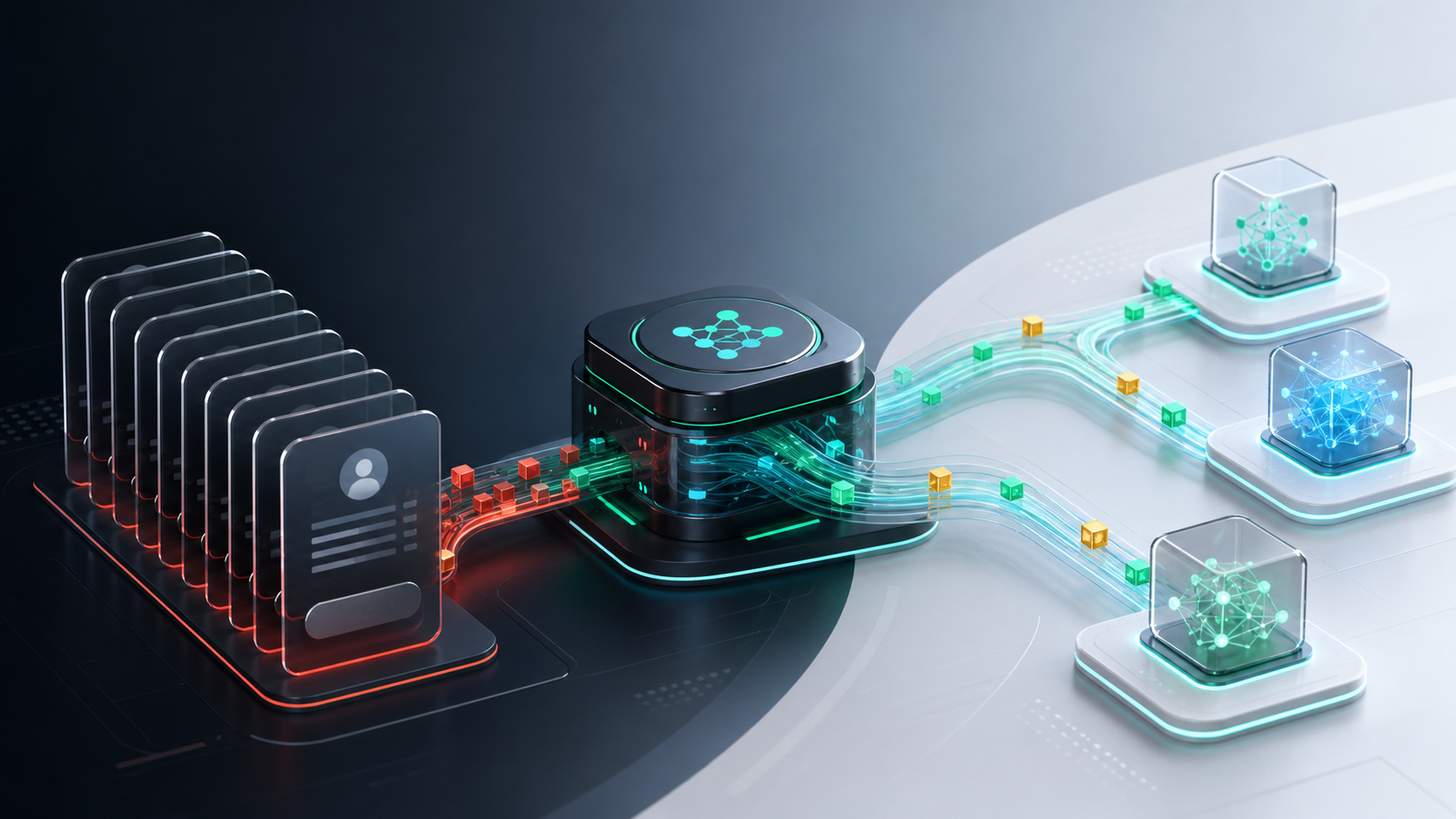
A relay station behaves more like a model pool. You recharge once, then choose the model by task: cheaper models for routine work, stronger models for hard work, one model for Chinese writing, another for coding, and another for long context. When you temporarily need Claude, GPT, or another model, you do not have to immediately add another monthly subscription.
| Problem | Subscription | Relay station | Best fit |
|---|---|---|---|
| Uneven usage | Fixed monthly fee | Balance spent by actual tasks | Light, bursty, or occasional users |
| Regional access | Affected by official region, account, and payment rules | Access through a unified entry point | Users who cannot easily use official services |
| Multi-model needs | Several memberships are managed separately | One recharge can switch models by task | Writing, coding, automation, and batch workflows |
When a subscription is still better
Subscriptions are still useful. They are better when:
- you use one official product every day
- you depend on its web interface, uploads, projects, voice, image tools, and research features
- you do not want to think about routing, API keys, balance, or usage details
- your usage is stable enough to use the monthly entitlement
- you care most about the official account system and integrated experience
If you live inside ChatGPT or Claude every day, an official membership is still the most convenient choice. It buys the full product experience, not just model calls.
When a relay station is better
A relay station is usually a better fit when:
- you do not want multiple fixed monthly AI subscriptions
- your usage is uneven
- official service access is inconvenient in your region
- you want to switch between GPT, Claude, Gemini, DeepSeek, and other models after one recharge
- you want to connect AI to scripts, websites, automation, or internal tools
- you care more about completing the task than staying inside one official web product
In plain terms: a subscription buys the official product experience. A relay station buys flexible model access. If you need the experience, subscribe. If you need flexible access, a relay station often makes more sense.
The risks still matter
Relay stations solve several subscription problems, but they should not be chosen blindly. Check at least:
- whether the models are real or downgraded
- whether usage records and balance deductions are transparent
- whether uptime is stable
- whether privacy handling is clearly explained
- whether refunds, support, and incident compensation exist
- whether the provider supports the models and API formats you actually need
Low price is only the first layer. For long-term use, stability, transparency, and trust matter more than the lowest number.
Conclusion: subscriptions solve experience, relay stations solve flexibility
Subscriptions are best for stable heavy users who want one official product experience. Their strengths are convenience, integrated tools, and low setup friction.
AI relay stations are better for uneven usage, multi-model needs, regional access constraints, API workflows, and automation. Their strengths are one recharge, on-demand consumption, model choice, and one unified entry point.
The decision is simple:
- If you use one official product every day, buy the membership.
- If you use AI in bursts or often switch models, use a relay station.
- If you need both, keep one core membership and use a relay station for multi-model, batch, and automation work.
The cost-effective setup is not the one with the most subscriptions. It is the one that puts each task into the right usage model.
Related Reading
- AI Relay, Official API, or Subscription: Which One Should You Use?
- How to Choose a Reliable AI Relay Station
- How AI API Billing Works